Crop residue protects soil, conserves moisture and returns valuable nutrients to the field. But when residue accumulates faster than it breaks down, it can also influence planting conditions, equipment performance and operational efficiency.
Understanding both sides of residue is the first step toward managing it more effectively.
Before the First Seed Goes In, Residue May Already Be Influencing Your Season
Residue affects every operation differently. The question isn’t whether you have residue. It’s how much it’s influencing the way your fields perform. Start by thinking about the past few planting seasons.
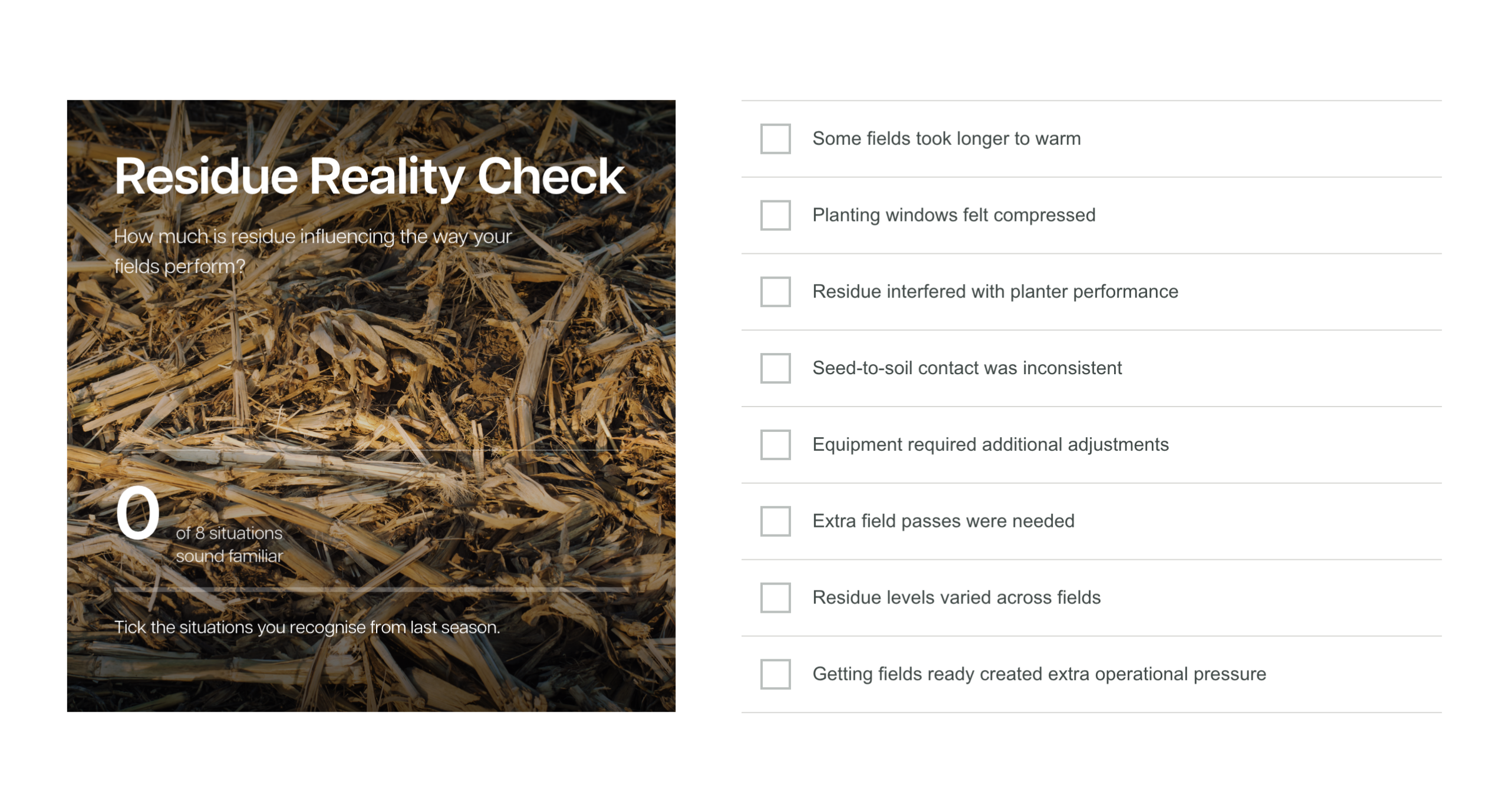
Whether you checked one box or several, residue rarely creates just one challenge. More often, one issue leads to another.
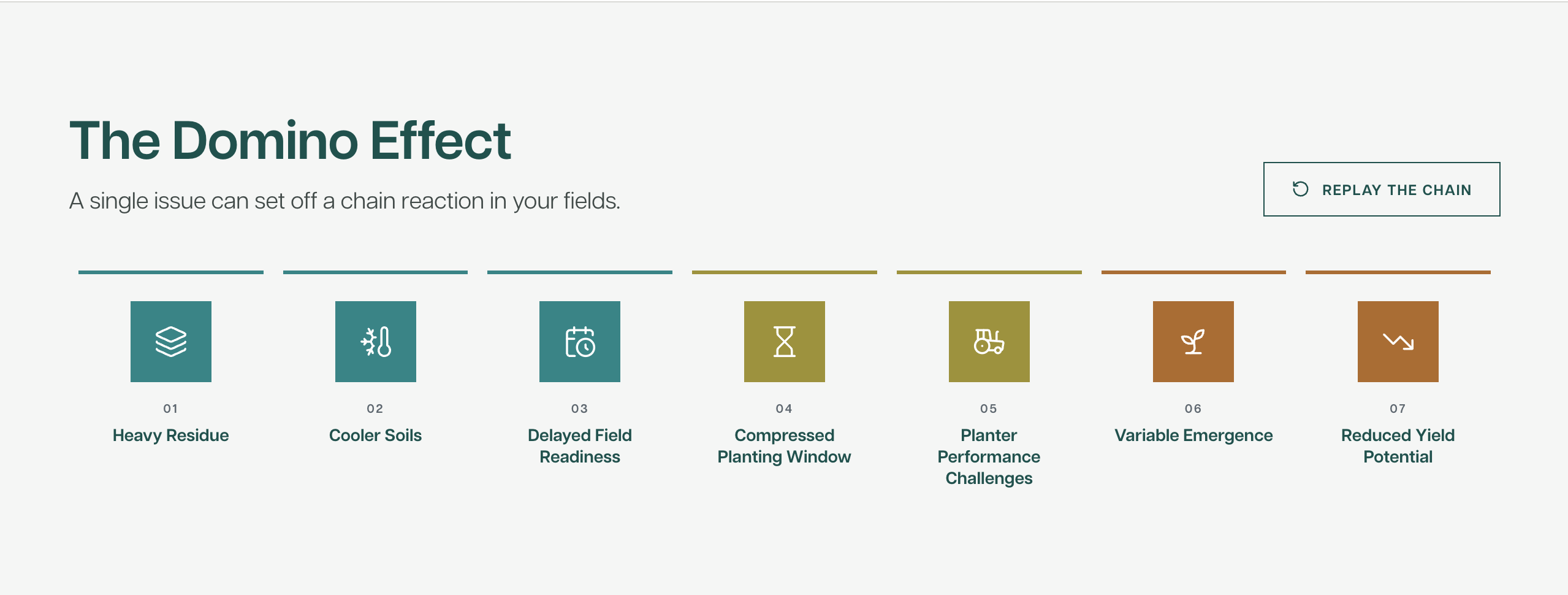
Every Spring Challenge Has a Chain Reaction
A single issue can set off a chain reaction that influences field conditions, planting decisions and crop establishment long before the crop emerges.
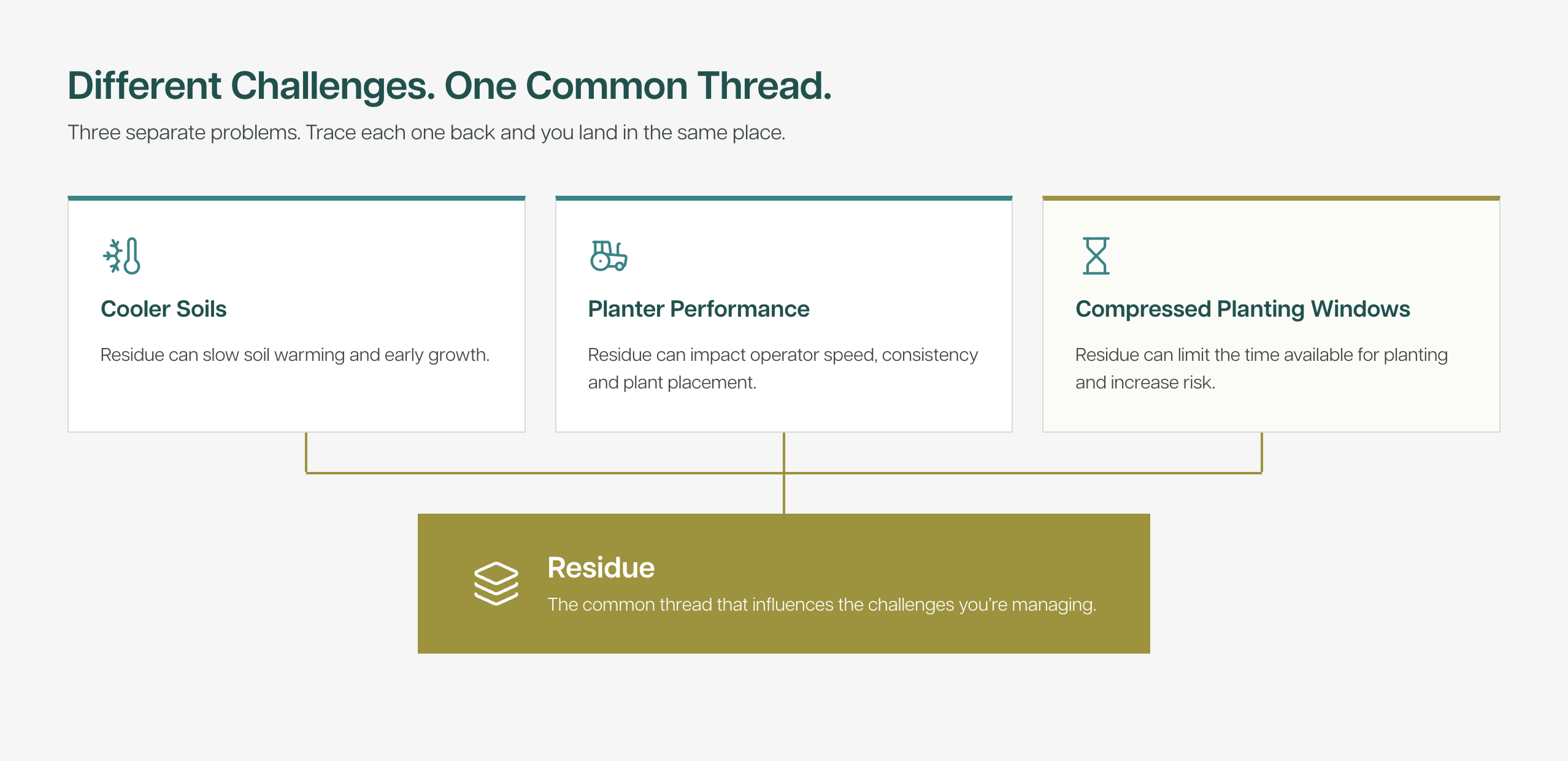
Different Challenges. One Common Thread.
Whether the issue is planter performance or compressed planting windows, residue often influences the conditions you’re managing before the crop ever emerges. The goal isn’t to eliminate residue. Rather, it is to manage it in a way that supports early crop performance.
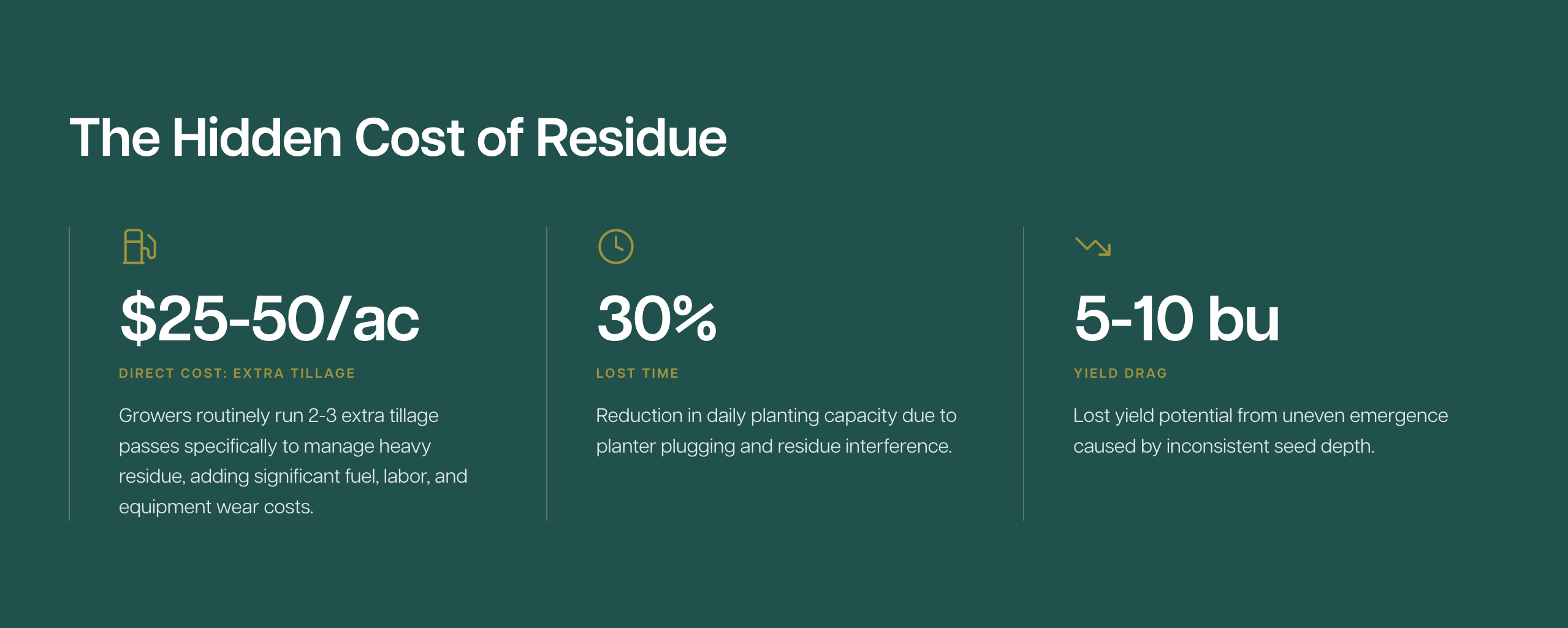
Small Friction Adds Up Across Every Acre
The effects of residue don’t always appear on a balance sheet. More often, they show up as small inefficiencies that influence time, equipment, field conditions and planting flexibility. That’s why residue can be a costly problem hiding in plain sight.
Every Operation Manages Residue Differently
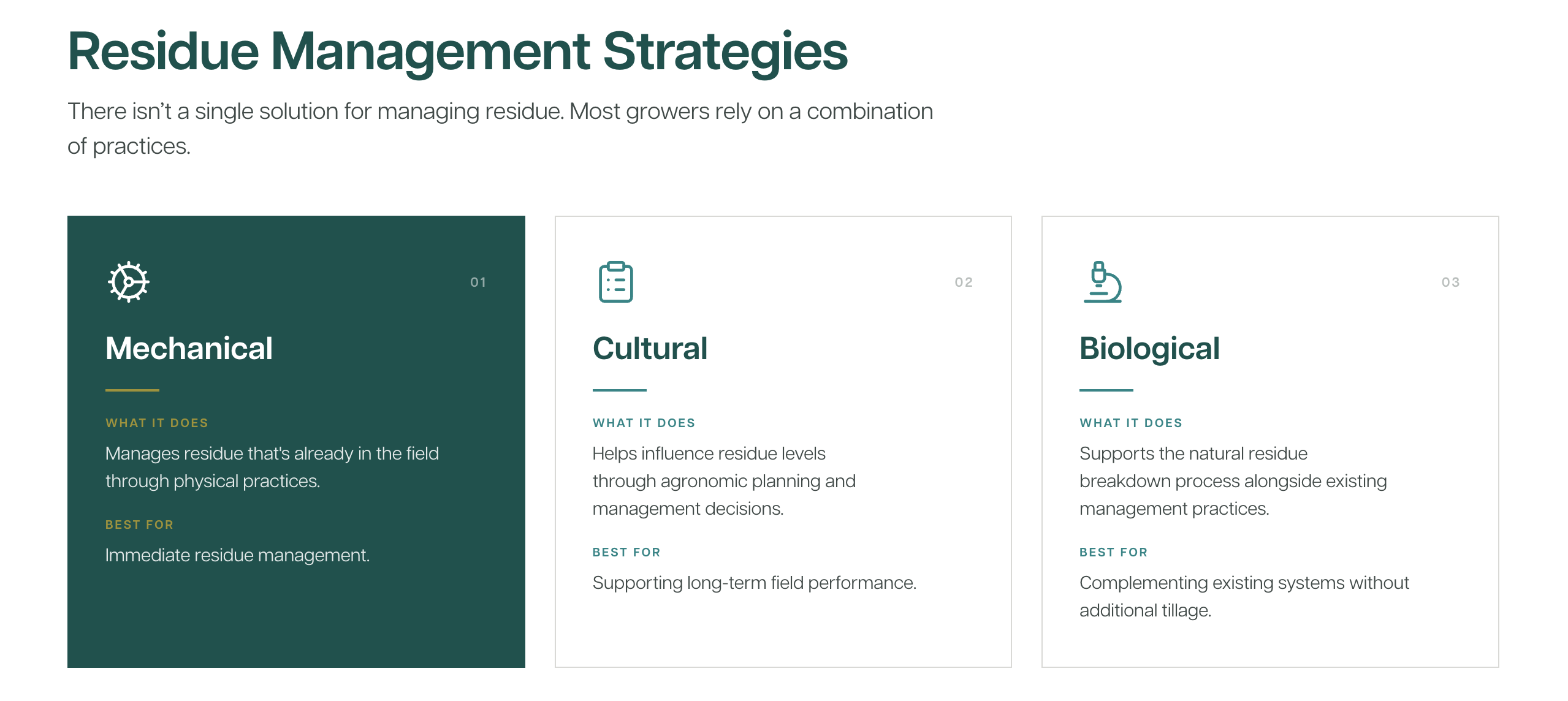
There isn’t a single solution for managing residue. Most growers rely on a combination of practices throughout the season to balance field conditions, operational efficiency, and long-term soil health.
What If Residue Breakdown Happened Faster?
For decades, growers have relied primarily on mechanical and cultural practices to manage residue. Today, enzyme-based technology offers another way to support residue breakdown while fitting within existing management systems.
Why Enzymes?
Residue breakdown begins immediately upon application in real-world temperatures as low as 32º Fahrenheit. No waiting on slow microbial cycles or ideal conditions.
Meet Renuvis Enzara™ from Mosaic Biosciences®
Renuvis Enzara is an enzyme-based residue management solution designed to complement existing farming practices. Formulated with endoglucanase enzymes, it begins working immediately after application and fits within existing fertilizer and herbicide passes — no additional field pass required.
Better residue management starts with understanding what’s happening beneath the surface.
Enzyme-based residue management can help create better field conditions, improve early crop performance and fit within your existing operation.
